50-ton Crawler Excavator Industry Market Positioning
Under the current industry background of large-scale open-pit mine development, transportation network upgrades, comprehensive water control, and the normalization of large-scale earthwork projects in China, the demand volume for heavy construction machinery continues to expand. As a core main model for medium-to-large heavy-duty construction, the 50-ton crawler excavator precisely fills the market gap where medium-tonnage equipment lacks power and ultra-large-tonnage equipment has poor adaptability. It is a core standard equipment for large-scale operations in mining enterprises and construction units. Compared with mainstream 30 to 40-ton small and medium excavators on the market, the 50-ton crawler excavator has a larger overall weight, higher structural strength, and stronger digging impact and heavy-load bearing capacity. It can easily cope with high-load operation scenarios such as hard soil, rock layers, and large-scale earthwork stripping, supporting all-weather continuous construction. Compared with 60-ton and above ultra-large mining excavators, this model has a more flexible body design and better site passability, adapting to medium and small mines and conventional large infrastructure projects without performance redundancy. At the same time, equipment energy consumption is more controllable, and the comprehensive construction cost-performance advantage is significant, with market penetration rates leading the heavy-duty excavator category.
Core Configuration and Heavy-Duty Operation Performance Advantages
The overall working weight of a standard 50-ton crawler excavator is stably between 49 and 51 tons. The machine adopts a heavy-duty integrated structural design tailored for harsh mining and industrial scenes. The equipment is equipped with a National IV environmental protection high-power turbocharged diesel engine. Its core advantage is low-speed, high-torque output with ample power reserve and smooth output. Facing high-intensity operations such as hard soil excavation, rock crushing, and thick-layer earthwork stripping, it does not experience stalling, speed dropping, or power attenuation, perfectly adapting to the continuous construction needs of mining and infrastructure. The hydraulic system uses a new generation of intelligent load-sensing control systems that automatically adjust oil pressure and flow based on real-time operation resistance, achieving precise power matching and eliminating power waste. This intelligent hydraulic system significantly improves operation response speed and control precision. The earthwork excavation, rotation, unloading, and leveling processes are continuous and efficient, greatly improving cycle operation efficiency while effectively reducing fuel consumption during idle and light-load states, balancing high-efficiency construction and energy-saving advantages. Equipment attachments and key structures use high-strength wear-resistant alloy materials. The boom, dipper arm, and bucket undergo overall forging and thickened reinforcement. Key stress welds use multi-layer anti-corrosion and wear-resistant welding processes, specifically optimized for rock impacts, high-frequency friction, and long-term heavy-load fatigue. It exhibits excellent resistance to deformation, wear, and impact, significantly reducing equipment failure rates and extending the service life of core structures. The chassis is equipped with widened and thickened track pads and thickened rollers and idlers. With a large ground contact area and strong traction, it effectively reduces ground pressure. It drives stably on muddy lowlands, gravel slopes, and uneven mine road surfaces without slipping or getting stuck, demonstrating extremely strong adaptability to complex terrains. The new 50-ton crawler excavator comprehensively upgrades intelligent construction and O&M systems, featuring real-time condition monitoring, intelligent fault warnings, operation data statistics, and remote status monitoring. It can synchronize core data such as equipment speed, oil temperature, operation duration, and running faults in real-time, helping construction teams grasp equipment status in real-time, identify potential hazards in advance, reduce sudden fault downtime, and ensure steady project progress while improving overall construction efficiency.
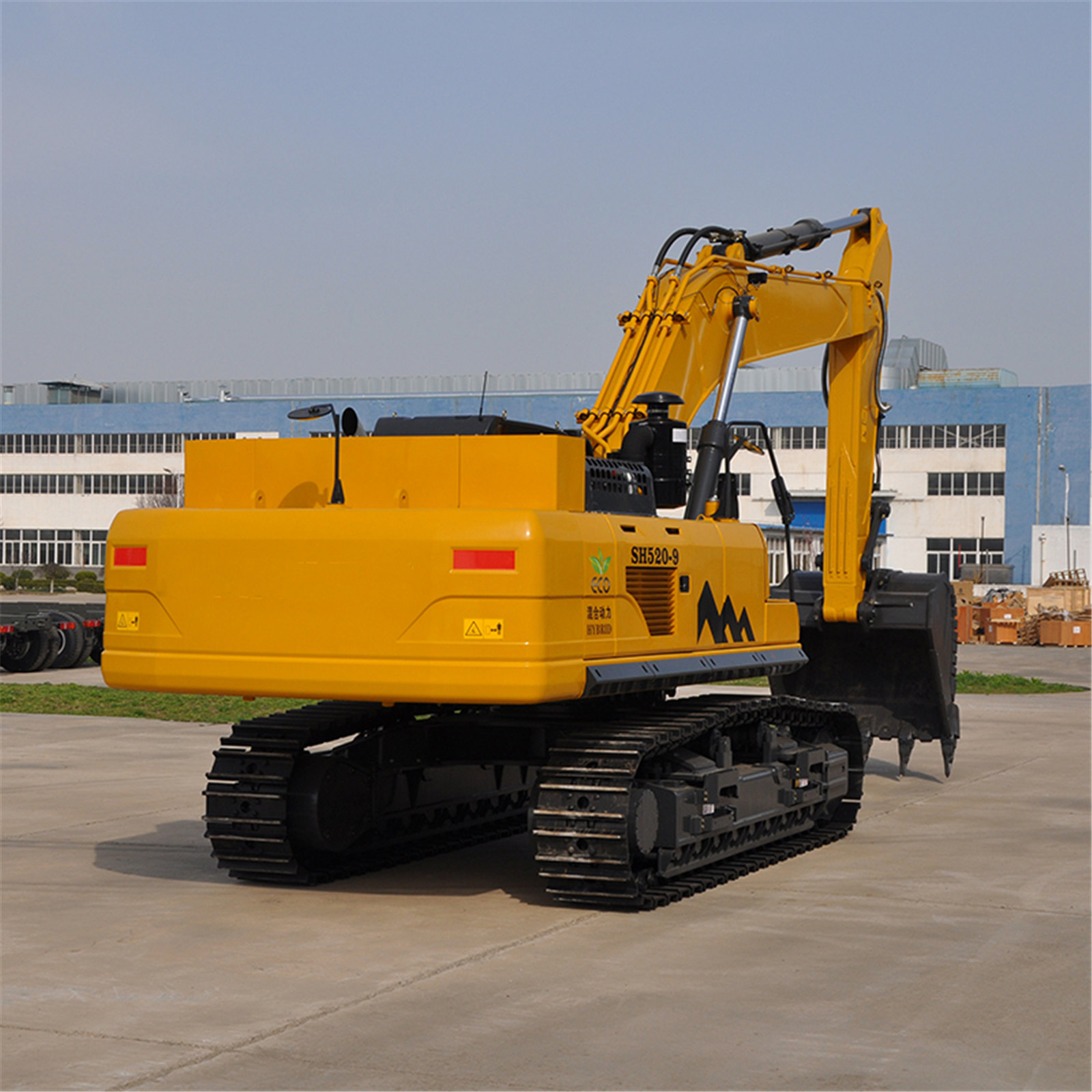
Detailed Explanation of Multi-Scenario Construction Applications Across Industries
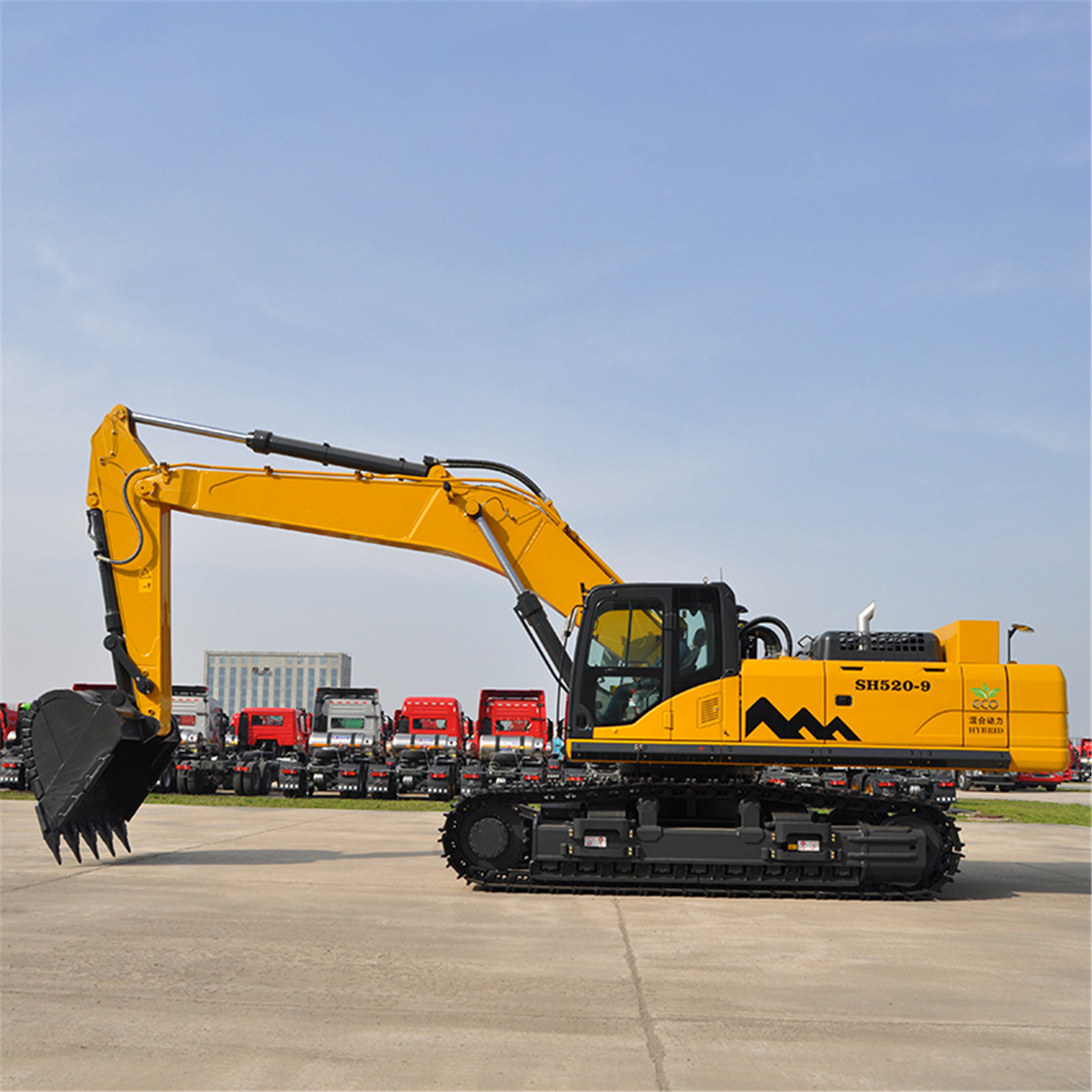
With its powerful heavy-load performance, stable operation, and wide adaptability to working conditions, the 50-ton crawler excavator deeply covers major heavy-duty engineering fields, becoming a necessary piece of machinery for multiple industries. In the mining sector, this model is a core equipment for standardized operations in open-pit mines, mainly responsible for core tasks such as mine layer earthwork stripping, ore excavation and transfer, yard organization, temporary road construction, and waste residue cleaning. It can adapt to the high-load, high-intensity, all-weather operation mode of mines for a long time, effectively improving overall mining efficiency and ensuring the stable operation of the mining production line. In the transportation infrastructure sector, the equipment is widely used in highway, railway trunk lines, airport expansion and reconstruction, large industrial parks, and municipal new district construction projects. It is mainly responsible for foundation pit excavation, large-scale earthwork filling, roadbed widening and shaping, construction waste removal, and preliminary site leveling and compaction. With the advantage of large earthwork volume per operation and high construction stability, it can quickly complete large-scale earthwork projects, effectively shortening the construction cycle of infrastructure projects and ensuring project progress targets are met. In the water conservancy sector, the 50-ton crawler excavator, with its excellent waterproof, rust-proof, and anti-corrosion properties, adapts to special operation environments such as waterside, humid, and sandy areas. It is widely used in river channel dredging, dam reinforcement and widening, flood control earthwork piling, water conservancy foundation pit excavation, and reservoir area site improvement. It is a core main equipment for river management, flood control, and water conservancy upgrade projects. At the same time, this model can also adapt to special heavy-load scenarios such as large-scale land reclamation and post-disaster site cleaning. Its multi-functional operation attributes make it a benchmark model with extremely high versatility in heavy-duty construction machinery.
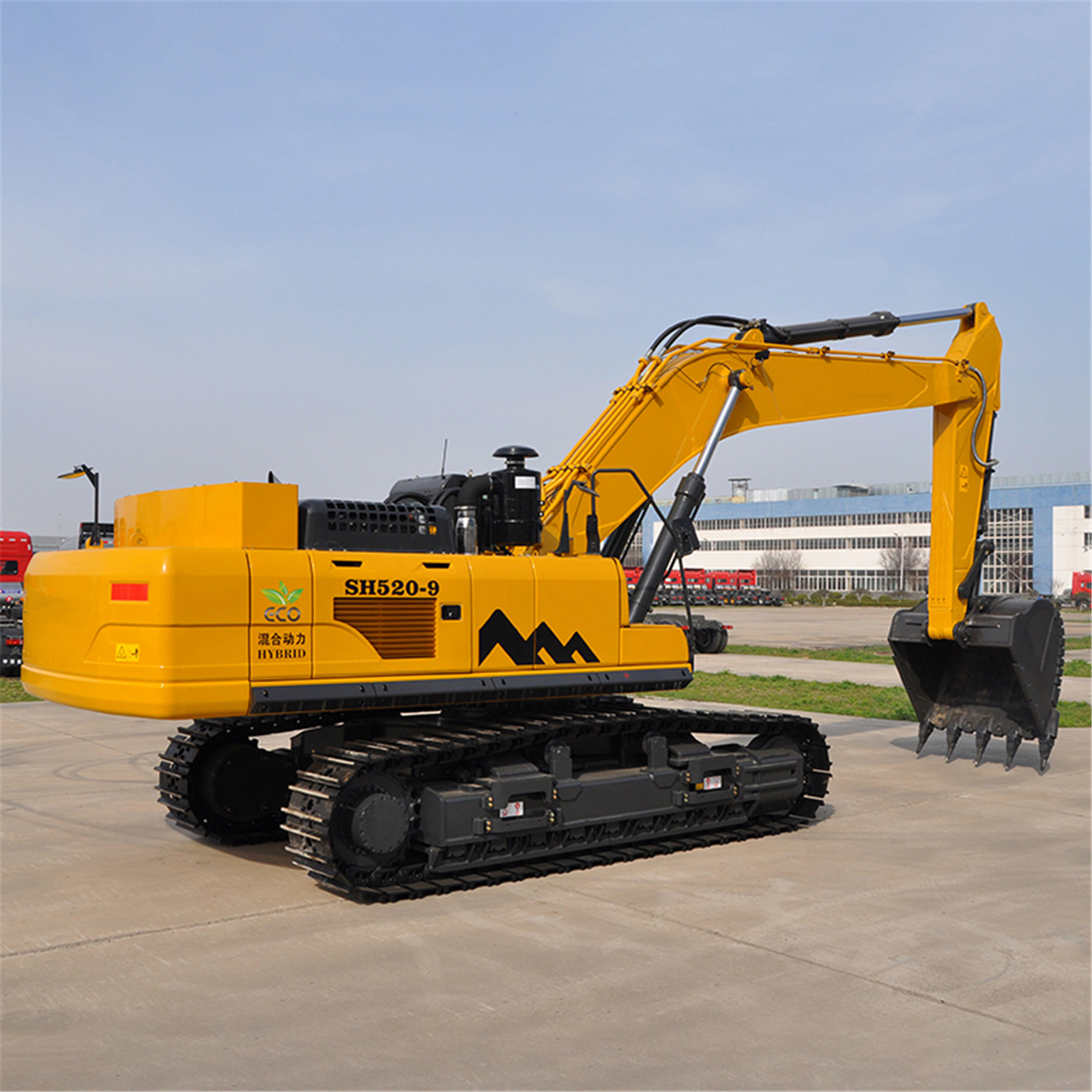
2026 50-ton Crawler Excavator Industry Status and Development Trends
In 2026, China's construction machinery industry continues to iterate towards standardization, energy saving, and intelligence. Environmental protection policies are continuously implemented, and construction engineering standards are constantly upgrading. Traditional high-energy consumption and low-stability small and medium-sized equipment are gradually being eliminated by the market. The 50-ton crawler excavator, with its balanced performance, wide working condition adaptability, and controllable operating costs, sees a steady growth in market demand. It has become the preferred model for mining enterprises and construction teams to upgrade their equipment, with market holdings continuously rising. Looking at future industry development trends, the 50-ton crawler excavator will continue to upgrade around three core directions. First is intelligent unmanned operation. Functions such as remote control operation, automatic leveling, intelligent operation planning, and unmanned construction are gradually becoming popular, effectively reducing the difficulty of manual operation, adapting to hazardous construction scenarios, and improving construction safety and precision. Second is green energy saving. Low-emission engines, intelligent fuel-saving systems, and energy recovery technologies are continuously optimized to further reduce equipment energy consumption and exhaust emissions, fully aligning with green construction environmental requirements. Third is durability and specialization. For special working conditions such as mining and water conservancy, equipment structures will continue to upgrade in wear resistance, corrosion resistance, and impact resistance. Specialized sub-models will become more diverse, further improving the stability of heavy-load construction and equipment service life, helping the heavy-duty engineering industry develop in a high-quality, efficient, and green manner.



 Small Bulldozer
 Medium Bulldozer
 Large Bulldozer
 Mini Excavator
 Small Excavator
 Medium Excavator
 Large Excavator
 Wheel Excavator
 Small Loader
 Medium Loader
 Large Loader
 Skid Steer Loader
 Backhoe Loader
 Single-drum vibratory roller
 Tandem roller
 Pneumatic Tire Roller
 Mini Road Roller
 Landfill compactors
 Small Pipelayer
 Medium Pipelayer
 Large Pipelayer